Covid19-Passbook: a post-mortem
45,000 passes, 28 languages, zero personal data on a server. I shut down Covid19-Passbook this week. What worked, what broke quietly for four years, what it cost, and what I’d keep for the next side project.

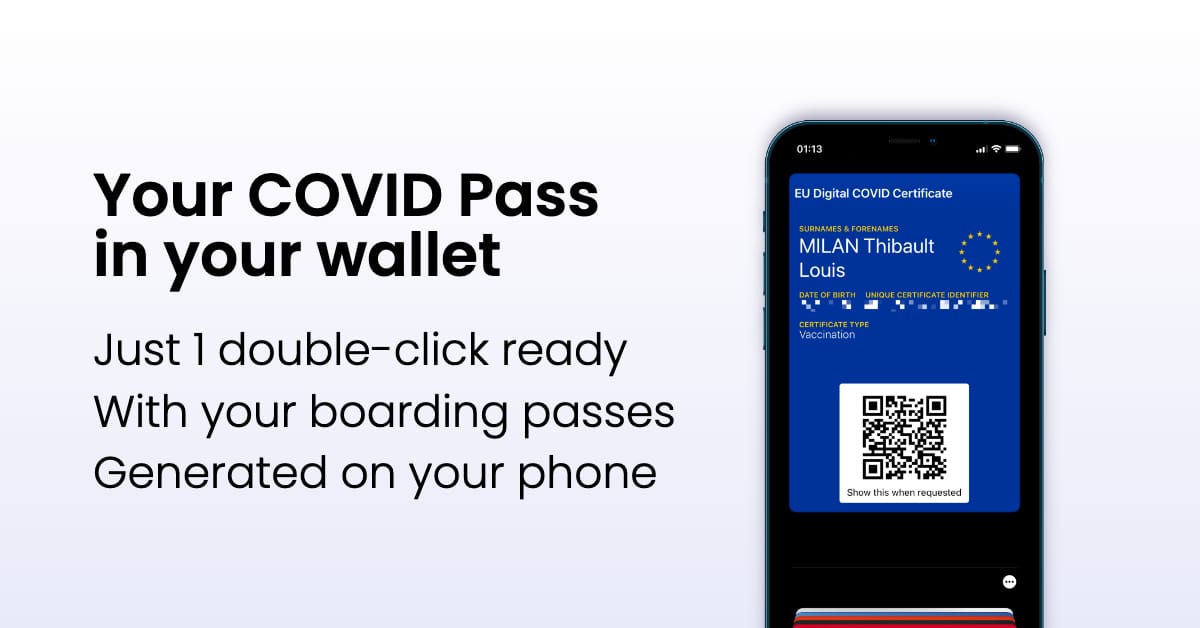
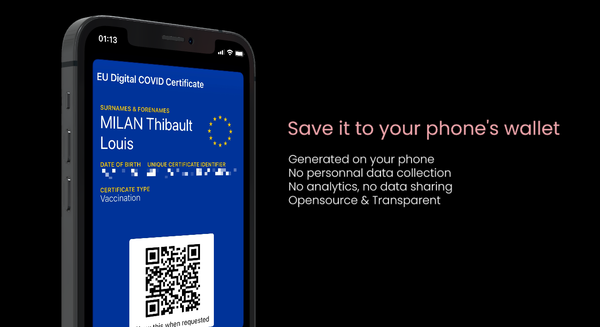
This week I shut down Covid19-Passbook. It was a small web app that turned your EU Digital COVID Certificate into a pass for Apple Wallet. More than 45,000 people used it. Twenty-eight languages. A white-label for a health company. An explainer in the Irish Independent.
And I never wrote a single line about it on this blog.
So here is the post I should have written in 2021, turned into the one I can write now: a post-mortem. What worked, what broke, what it cost, and what I'd keep for the next side project.
Five years in eleven dates
From a lockdown side project to a farewell page.
- COVID-19 Venue MapFirst lockdown. A crowdsourced map of what is still open in Dudelange, built on a Google Sheet.
- #nocode Thursday and the Customer RegistryA contact tracing form built live on Twitch in about an hour, then offered for free.
- Covid19-Passbook goes liveTwo weeks of evenings. Scan your EU certificate, get an Apple Wallet pass.
- Ireland finds itThe Irish Independent and Irish Twitter send the biggest wave of traffic the site ever saw.
- ~15,000 passesAbout 34,000 unique visitors in the first weeks, according to Silicon Luxembourg.
- RedesignNew design by Laurence Vagner, accessibility work by Geoffrey Crofte.
- A white-label for DoctoranytimeA health booking platform runs its own branded version for its patients.
- Version 2.3Camera selection, updated vaccine definitions. The last real release.
- iOS 15.4Apple adds EU certificates to Wallet natively. The best possible ending for a workaround.
- The EU regulation expiresThe certificates stop being a thing.
- ShutdownExpired signing certificate, AWS stack deleted, farewell page online.
The itch
June 2021. Luxembourg starts issuing CovidCheck certificates. Mine arrives by mail, printed in grayscale. You can also download a PDF from MyGuichet. That's it. No app to keep it on your phone.
I didn't want another app anyway. Every country was shipping its own, some of them with trackers baked in. I already had an app on my phone that I trust with my credit cards: Wallet.
So I spent two weeks of evenings figuring out how a QR code becomes a .pkpass file. On June 29, the site was live. The idea fit in one sentence: scan your certificate, get a card in your Wallet, and your data never leaves your phone.
What worked
Use what people already have
No install, no account, no store review. A web page, a camera, a button. The best interface for a health certificate turned out to be one people already knew: the card they tap to pay for coffee.
Privacy by architecture, not by promise
Apple requires every pass to be signed with a private key. That key can't live in a browser. The easy way would have been to send the certificate to a server, build the pass there and send it back.
I didn't even need to build anything for that. Plenty of existing services already generate Wallet passes from whatever you send them. But "whatever you send them" would have been your QR code, and your QR code is your certificate: your full name, your date of birth, your vaccines, your test results. All of it readable by anyone who decodes it. Shipping that in clear to a third party, for a card in your Wallet, is not a trade I wanted to offer anyone.
It's also why I never supported Google Wallet. A Google Wallet pass is created on Google's servers, which means sending them all the data on the card. Android users could still save the .pkpass file in apps like PassAndroid or Stocard, which read it locally.
I didn't want to hold anyone's health data, not even for a second, and I didn't want to hand it to someone else either. So the phone does everything: it reads the QR code, decodes the certificate, builds the pass, and computes a manifest of SHA-1 hashes. Only that manifest goes to a tiny AWS Lambda, which signs it in memory and forgets it. The phone zips the final file.
No database. No cookies. No analytics. Nothing to leak, nothing to sell, nothing to subpoena. The full schema is on the project page.
Open source invited strangers in
Because the code was public, people I'd never met showed up. Translators brought the app to 28 languages through Crowdin. Eighteen people contributed code. Alain Vagner built the signing service with me. Laurence Vagner redesigned it in August. Geoffrey Crofte made it accessible. People also trusted it because they could read it. For health data, that matters more than any privacy policy.
Distribution happened without me
I posted it on Hacker News and Product Hunt, and data.public.lu featured it the same week. Then Ireland happened. A health correspondent tweeted it, it got passed around during a TV show, and the Irish Independent put it in an explainer. That one article alone sent more than 18,000 people. By late July, Silicon Luxembourg counted about 15,000 passes.
Netlify's sponsored account absorbed every spike. The Lambda bill stayed under a euro a month.
The project in numbers
- 45k+passes generated
- 18k+visitors from one Irish Independent article
- 28languages, translated by volunteers
- 18code contributors
- 127GitHub stars, 22 forks
- 0personal data stored on a server
- 3rdin Netlify's yearly contest of most useful sites
- <€1per month of AWS Lambda
Pass count is an estimate: the project never tracked its users, on purpose.
What didn't
A European standard, 27 implementations
"EU Digital COVID Certificate" sounds like one format. In practice, every country had its quirks. Recovery certificates whose dates iOS refused to open. Timezone bugs in date formatting. A Greek error message that showed up in Russian. Most of the changelog is me learning about other countries' administrations one bug at a time.
The bug tracker became a help desk
I added a "report a problem" button that opened a GitHub issue. Great for catching bugs. The repo ended up with 323 issues, 194 of them sent from inside the app. Most weren't bugs. They were people stuck, often in a hurry, who needed their certificate to work right now.
The quiet failure
In June 2022, a new kind of report arrived: "Safari cannot download this file." The signing chain had broken. The scan still worked, the preview still worked, and the very last step failed.
The reports kept coming for months. Same bug, different people, each one polite and a bit desperate. They stayed open. By then Apple had shipped native support in iOS 15.4, life was moving on, and fixing a certificate pipeline for a tool the world no longer needed never made it to the top of the list.
That's the part of this post-mortem I'm least proud of. Not that the project ended, but that it kept a door open to a room that was empty. For four years, the site said "Scan my certificate" and then failed at the very end.
No numbers, by design
I never tracked users. I'm still glad I didn't. But it means the 45,000 figure is an estimate built from a Silicon Luxembourg article, a partner's stats and memory. That's the price of not watching people, and I'd pay it again.
Not monetizing it
The app was free, with no ads and no premium tier. A Buy Me a Coffee link covered the running costs, and I committed to giving 10% to LGBT non-profits. I published every euro in a transparency report.
The only commercial thing was a white-label version for Doctoranytime, a health booking platform, who ran it under their own brand for their patients. It was a nice proof that the idea worked for someone other than me.
Where the coffees went
From the public transparency report. 60.5 coffees, every euro accounted for.
The Apple developer account ate most of the budget. Which is a bit ironic, since Apple's own signing requirement is also what finally ended the project.
Why now
Three things killed Covid19-Passbook, in order:
- March 2022. iOS 15.4 adds EU certificates to Wallet natively. The workaround becomes a feature. That's the best possible ending for a side project like this one.
- June 30, 2023. The EU Digital COVID Certificate regulation expires. The certificates stop being a thing.
- The signing certificate. It no longer signs. Without a valid signature, Wallet refuses the pass anyway.
Points 1 and 2 were the real end. Point 3 made it official.
How I closed it
I tried to close it the way I'd want a service I used to be closed:
- A farewell page replaces the app on every URL, in English and French, with the story, the numbers, a press review and the thank-yous.
- The AWS stack is gone: Lambda, API Gateway, logs, the alarm and its notification topic. Nothing left running, nothing left stored.
- Every open issue got an answer, a thank-you, and a link to the page before being closed.
- Screenshots of the site went into the README, so the repo keeps a memory of what it looked like.
- Both repos are archived. The code stays public.
It took one evening. It should have taken one evening in 2023.
What I'd keep for the next one
- Build on what people already trust. Wallet beat every dedicated app.
- Design the data out. The safest personal data is the data you never receive.
- Open the code early. It brought translators, contributors and trust, in that order.
- Publish the money. A transparency report costs nothing and kills every suspicion.
- Write the ending on day one. A side project needs a sunset date, or at least a condition: "when Apple ships this, I stop." I didn't have one, so the project ended four years after it stopped being useful.
Thank you
To everyone who scanned, translated, reported, shared, wrote about it or bought me a coffee: thank you. The full list, with links, is on the farewell page.
It was a small tool for a strange time. It did its job. Now it can rest.
Covid19-Passbook, the project page
The architecture, the "store as little as possible" principle, and the other small COVID-19 tools I built between 2020 and 2021.