
In 2018, I left KPMG's comfortable salary — not for a company, but for a vision. Fabrice Dewasmes had a clear idea of how to build innovation culture at Smile, and that clarity was magnetic. Eight years later, as I prepare to leave for Paperjam, here's what I learned about following leaders, becoming one, and knowing when it's time to move on.
2018: Following a Vision, Not a Brand
I had told myself: two years at KPMG, maximum. Not because I wasn't learning — the scale of projects there was insane, the kind of work most people never get to touch. But after two years, I could feel the momentum slowing down. The appetite for bold moves was fading. The money was easy, but the sense of purpose wasn't.
I needed something different. Not bigger — meaningful.
Fabrice Dewasmes and I had known each other for years but never worked together. Timing was never right. Until 2018, when the planets aligned.
And then there was Alain Rouen.
Alain and I went way back — we'd worked together at the Wort, then again at KPMG. When he joined Fabrice a few months before me, that was the signal I needed. Alain is the tech expert par excellence: exceptionally intelligent, with the kind of deep technical brilliance that makes complex problems look simple. Fabrice had the vision and an unwavering commitment to doing things right — not just fast, but well.
And me? Honestly, I'm still not entirely sure what they saw in me. I was the digital jack-of-all-trades: someone who could handle user experience, market an idea, manage the entire upstream phase of a project — and then hand it off to the engineers who'd actually build it. Except I could also prototype when needed, which turned out to be pretty useful in a team that small.
Together, we were at the very beginning of building Smile's innovation practice. Ground zero. A blank slate. And that's exactly the kind of challenge I live for: building from scratch.
But here's what sealed the deal: Fabrice wasn't interested in innovation theater. He didn't want flashy demos for marketing decks. He wanted innovation that actually served people. That carried a vision: technology should serve the common good. User-centric / Tech4goo / Not buzzwords principles.
We started in cafés (very "startup nation", I know). Then we moved into a bohemian coworking space. The vibe was pure maker culture: messy, hands-on, experimental. We lived among circuit boards and Lego bricks.


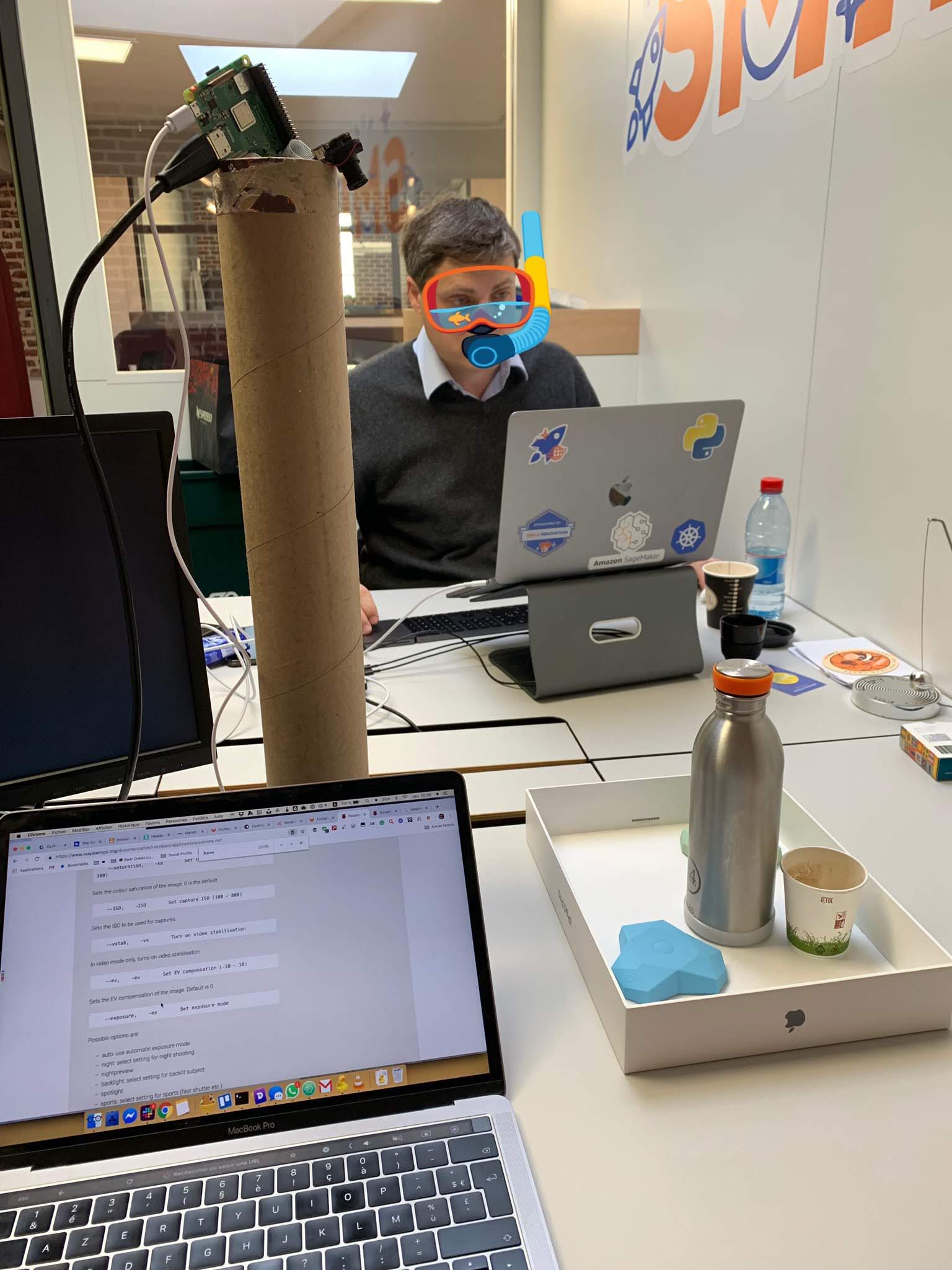
It was the opposite of KPMG's polished glass offices. And I loved every second of it.
What I learned: I didn't join Smile for the brand. I joined for the people — Fabrice's vision, Alain's brilliance, and the chance to build something from nothing alongside a team that made me better. That distinction mattered more than I realized at the time.
2019-2021: Building the Foundation (and Surviving COVID)
We didn't just talk about tech4good — we built it.
One project I'm particularly proud of: a smart waste bin for corporate restaurants that weighed and identified food waste types, then generated recommendations to help caterers adjust menus and reduce waste. Privacy-first, always. We worked extensively with embedded systems and systematically ran AI models on edge — locally on the device — rather than sending data to the cloud. Because user privacy wasn't a nice-to-have. It was a principle.
But here's the thing about innovation: you can have great projects and still lack structure. We'd run hackathons that generated tons of ideas, but it felt like one-shot efforts every 2-3 years. Not sustainable. Not scalable.
So Fabrice and I designed a proper process: how to propose projects, how to review them, how to make decisions. We created rituals where business unit leaders would vote on projects that aligned with their strategic priorities.
Quick sidebar: In Design Thinking, you often ask people to "invest" fake money to vote. At first, I made fake dollars with Fabrice's face on them — like the "Diego$" we used at Startup Weekends in Luxembourg. Then I had an epiphany. Smile's CEO is named Marc. So I created... DeutschMarks with his face on them.
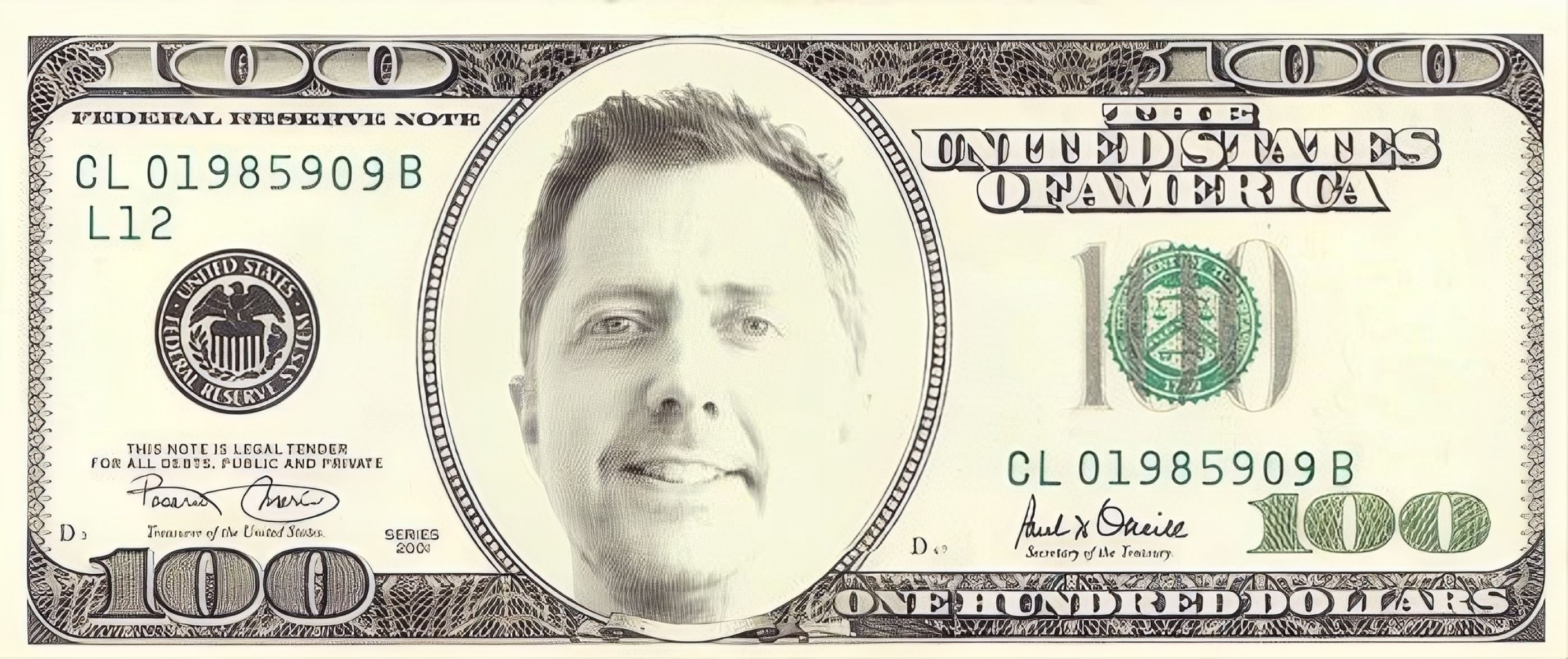


We used them for a while. Apparently, Marc once found a stray bill in a meeting room and... didn't find it as funny as we did. Oops.
Anyway, the process worked. We collected around 40 project ideas, refined about 20, and actually incubated 3. Which sounds modest, but here's the friction: it's hard to incubate projects when your company is a body shop, not a product company. The mindset isn't aligned for it. You're selling developer hours, not building products. That tension was already visible back then.
Then COVID Hit
Remote work wasn't the problem. We had a team of 10-15 people spread across Europe — only 3 of us in Luxembourg — so we were already used to distributed work.
The problem was everything else.
Most of France went on technical unemployment (chômage technique). Projects halted. Budgets got slashed. People's availability vanished overnight. We went from momentum to standstill.
We still managed to experiment with a few things. For example, we built a flex-office app with contact tracing using no-code tools for €5,000 — versus an initial estimate of €145,000 for a native app. But when we tried to commercialize it? Same barrier. Same mindset clash.
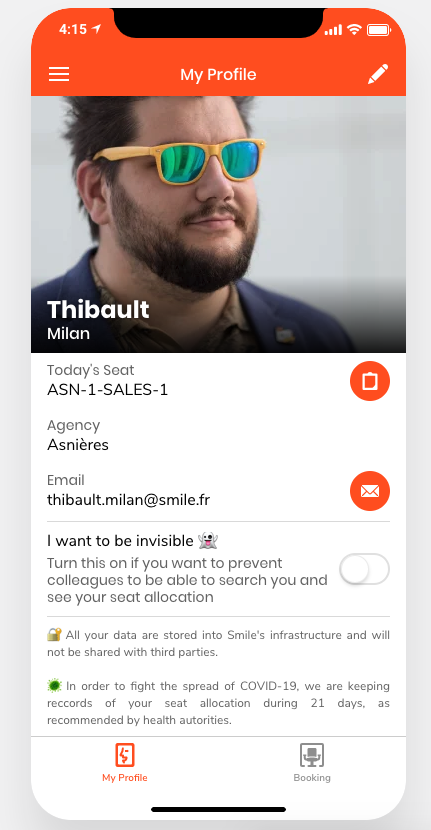

Post-COVID, the directive came down: no more travel within the group. Everything remote. Which sounds reasonable on paper, but in practice it severed the human connections that made innovation work. We stopped visiting agencies. We stopped seeing clients in person. Everything slowed to a crawl.
Later, people would criticize Fabrice for innovation becoming "too distant," locked in an "ivory tower." But that wasn't his choice. That was the group's decision. And it quietly killed what we'd been building.
What I learned: Innovation culture isn't tested in good times — it's tested when everything else is on fire. And structure matters more than inspiration — without a process, ideas just evaporate. But even the best process can't survive organizational constraints that work against it.
2022: The Pivot — When Your North Star Leaves
Fabrice was let go during a restructuring. With immediate effect.
He served his notice period at home. No contact with the team. No transition plan. No handover. Just... gone.
It was brutal.
What remained of the innovation practice got attached to Jean-Charles Bordes, who was Director of Offerings at the time. Jean-Charles is someone with tons of ideas — but also tons of things on his plate. The transition was chaotic.
He asked me to take over innovation leadership. But without the ability to build a team. Without budget control. Without a package adjustment. (Spoiler: there wouldn't be one.)
The operating model was... unconventional. I'd pitch ideas to Jean-Charles, he'd say yes or no, then allocate budget ad hoc as things moved forward. I never saw what he'd planned financially. I just had to make it work.
Oh, and we also lost our Luxembourg office. No fixed workspace anymore. Neopixl graciously hosted us, but it wasn't the same — harder to meet clients, harder to organize, harder to maintain visibility.
Learning to Navigate Without a Map
The first few months were disorienting. Jean-Charles's management style couldn't have been more different from Fabrice's. I had to learn a completely new way of working while keeping innovation alive.
My first year's strategy was built on continuity — taking what Fabrice had envisioned and adding my own touch here and there. Jean-Charles wanted me on every front, which was necessary for the company but impossible with our headcount.
So I started prioritizing. On my own. Including his ideas.
He couldn't do it himself — too many competing priorities. And somewhere in there, I realized: that was actually my job. To orchestrate. To say no. To decide what mattered most for innovation, even when it meant deprioritizing things the boss wanted.
So be it.
What I learned: When your north star leaves, you either become one yourself — or you drift. Leadership isn't just about having authority or budget. It's about making decisions when no one else will, and taking responsibility for the outcomes. Even when you don't have the title or the resources to match.
2023-2025: Leading Without a Net (and Winning Anyway)
The biggest bet I made was LLLM4dev — a multi-year project to fundamentally transform how developers work with AI.
When I started, there was almost nothing. No reliable studies. Just scattered marketing claims from model vendors. So I decided: we're building our own experiment.
We started with about 60 developers — different seniority levels, different project types, different technologies. For the first six months, we didn't even know what to measure. We had to figure out which KPIs actually mattered, how to track them, what "productivity" even meant in this context.
Then we built a proper program: a 4-month onboarding and training path for developers, structured rollout plans, deployment in waves of 50 people per month throughout 2025.
The Resistance
It wasn't easy. Project managers were terrified of losing productivity. So we made them a deal: we won't look at your margins during the experiment. That bought us time.
Developers were scared too — not of the tech, but of what they'd heard in the media. "AI will take your jobs." You know the drill. So we trained them, supported them, showed them this wasn't about replacement. It was about giving them better tools.
The Results
By the time we deployed at scale (after nearly 2 years), the numbers were undeniable:
- 97.14% adoption rate among developers
- +15% time savings across the entire project lifecycle, and way more on some specific task
- 1,760 hours saved in the first six months of 2025
- 0.3 FTE spent managing the entire transition (we'd projected 2 FTE)


But it wasn't just about speed. The real wins were qualitative:
- Better code coverage
- Improved documentation
- Easier project onboarding for new team members
We'd proven it worked. We'd built something real.
The Paradox
But here's the thing: we were winning tactical battles while losing the strategic war.
The market had shifted dramatically. Successive mergers and acquisitions were reshaping the industry — and Smile wasn't part of them. Client budgets were tightening. Technology preferences were changing. Fabrice, Alain, and I — the entire innovation team — had seen it coming. We'd been preaching about it for years. But the group couldn't — or wouldn't — adapt fast enough.
The project was a success. The transformation was real. But Smile as an organization? It wasn't ready. The mindset hadn't shifted. And my vision of where we needed to go was increasingly out of sync with what the company was willing to do.
What I learned: You can deliver results and still be misaligned with where the organization is heading. Winning battles doesn't mean winning the war. And sometimes, the hardest part of leadership isn't doing the work — it's accepting when it's not enough.
2026: When Vision and Reality Diverge
Eight years is a long time. Long enough to see multiple cycles. Long enough to know when it's time to leave.
The divergence wasn't sudden. It was gradual, like a fault line slowly widening.
When Fabrice left, we already knew the company had a distorted view of the long-term market. But after his departure, something shifted. The focus became increasingly short-term. Decisions were made in haste. Strategies contradicted each other. We lacked cohesion, lacked a shared vision to move forward together.
The Reality Gap
I kept pushing for agility. For adapting to where the market was actually going.
Post-COVID, the market had fundamentally shifted. Clients had become more risk-averse. They wanted to test their partners on smaller engagements before committing to larger ones. We were targeting projects in the €200-400K range, but the reality? The market had shifted to projects 10x smaller.
Don't get me wrong — we still landed big deals, some close to a million euros. But those became much rarer. The volume had shifted downward, and clients' behavior had changed with it.
And for innovation specifically, the appetite for expensive PoCs had evaporated. There was PoC fatigue. Clients didn't want prototypes they'd throw away. They wanted proof of value — real solutions they could actually use.
But our internal expectations hadn't caught up with that new reality.
The Decision
I'd been thinking about leaving for about a year. Not loudly. Not dramatically. Just... aware that the gap between my vision and the company's reality was widening beyond repair.
The job market in Luxembourg is tough, especially for a profile like mine. So I stayed. I didn't disengage from my work — I kept leading LLLM4dev, kept pushing innovation forward. But I knew it wasn't sustainable.
When the Paperjam offer came, everything moved fast. One week, and it was done.
What I learned: Loyalty to a vision is not the same as loyalty to an organization. And knowing when to leave — before you burn out, before you become bitter — is a form of leadership too. Sometimes the bravest thing you can do is walk away from something you built.
What's Next: Paperjam and New Beginnings
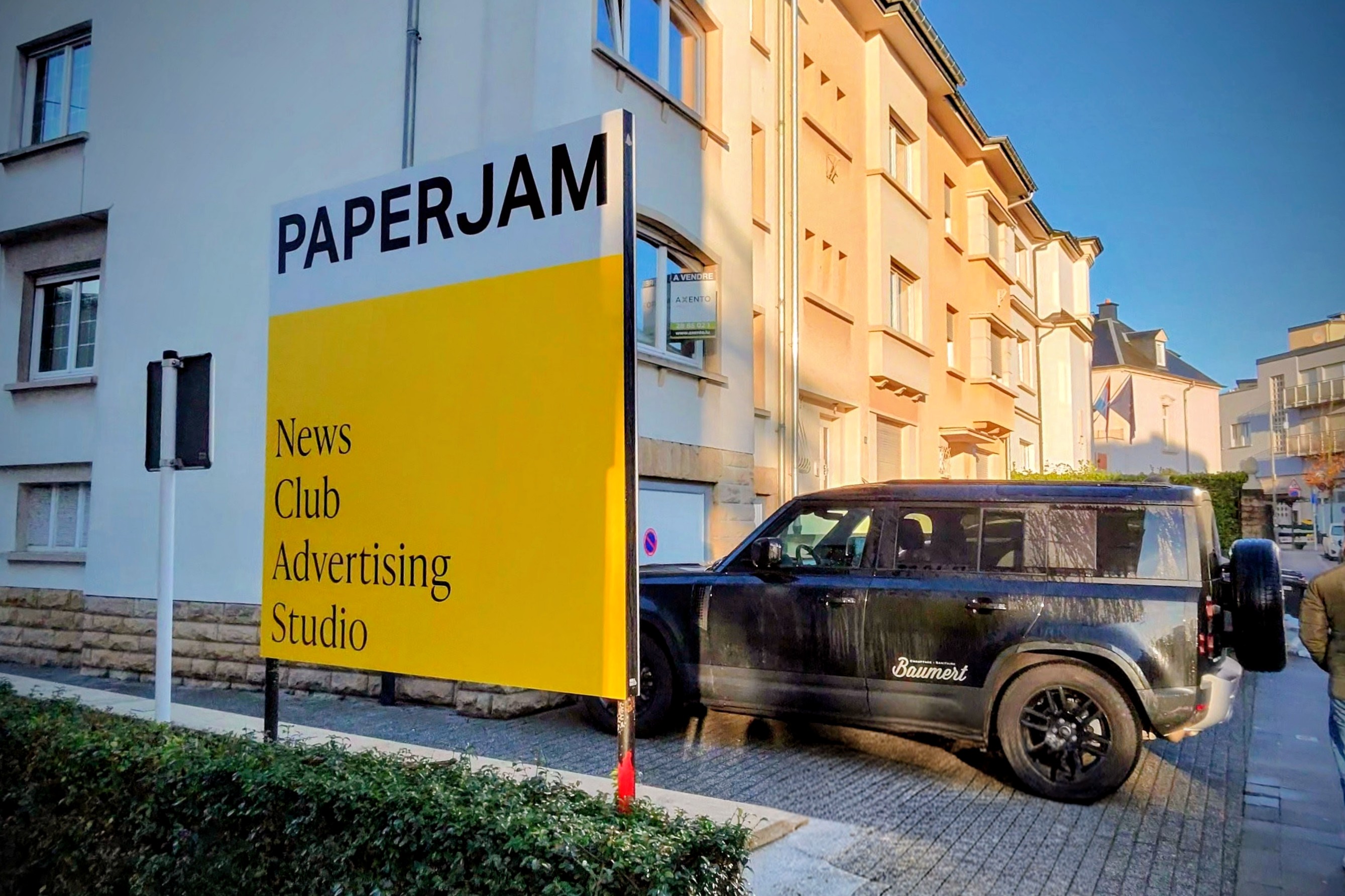
I'm joining Paperjam as Head of Digital & Platform.
My role will be to manage the entire digital ecosystem — the main site, the Club, La Bible; but also all the secrets we are working one. And, of course, supporting sattelite projects like the job board, and Nexus Luxembourg. Maintenance, evolution, new products, new offerings. The full stack.
Why Paperjam?
Simple: impact and exposure.
Paperjam is the business media and business club in Luxembourg. The most recognized. The first independent media in the country. With over 1,800 member companies and close to 250 events and training sessions per season, the Club alone connects and inspires the communities that move Luxembourg forward.
After years building innovation programs and pushing transformation projects, I'm excited to work on something with such direct, visible impact. Paperjam positions itself as the "café des initiatives" — a place for information, inspiration, and connection. That resonates deeply.
The Real Shift: Service to Product
But here's what really matters: I'm moving from a service company to a product company.
For eight years, I worked in a body shop model — brilliant people, great projects, but always someone else's vision, someone else's roadmap. At Paperjam, I'll be working on our products. Building our vision. Owning the strategy and the execution.
The audience? They call them Les Évolutionnaires — humanistic, progressive, confident, agile. People who want to understand the world and participate in its transformation. That's exactly the kind of community I want to build for.
That's the shift I've been craving. The chance to develop and articulate a vision, not just advocate for one.
The Dopamine of New Beginnings
I won't lie: the novelty is intoxicating. New challenges, new team, new stack, new problems to solve. There's a certain dopamine rush in starting fresh, and I'm fully ready to ride that wave.
What I learned: Sometimes the bravest thing you can do is start over. And sometimes, the right opportunity comes when you're finally ready to move.
Closing
Eight years. Hundreds of projects. One hell of a ride.
To Fabrice and Alain: without you, I simply wouldn't have joined Smile. You gave me the vision and the technical foundation to build on. Thank you for trusting me with it.
To Fabien Gasser: colleague from the early days, sharp-minded and resourceful. Thanks for being there from the beginning. You were deeply missed.
To Romain Ruaud: for the incredible work on the only product Smile ever published. You proved what's possible when you commit to building something real.
To Raphaële, Rayenne, and Victoire: for the ideas, the good vibes, and the constant support. Marketing & Communication was never just a service function with you — it was a partnership.
To Florian Pena.: for leading LLLM4dev with me through all the resistance and doubt. We proved it works.
To Maxime Rousseau and Frederic Raymond: for the AI acculturation workshops that helped so many people understand what was actually happening in the field.
To Olivier Ferger: for bringing relentless energy and dynamism year after year. I always felt more than welcome in your agency and we did so many amazing things.
And to everyone else I'm forgetting in this moment — thank you for making these eight years memorable. You know who you are.
The next chapter starts now. New team, new challenges, new products to build.
I'm not naive enough to think it'll be easy. But I'm optimistic enough to believe it'll be worth it.
Let's see what we can build together ✨.
Comments